The management of septic sludge and household waste is a major challenge for cities in Guinea in general, and for the urban commune of Mamou in particular. The sanitation sector is very poorly structured, characterized by the predominance of independent facilities and the absence of regulation for emptying services. This study aims to carry out a trial for the valorization of these types of waste produced in the urban commune of Mamou. The methodology consisted of collecting the substrates (septic sludge and household waste). Then, a sampling of 34 kg of each type of waste was done for co-composting. The substrate composting process lasted 40 days; the quantities of compost produced were evaluated. The different substrates produced respectively 23.3 kg of compost for concentrated septic sludge, or 68.52%, with 10.7 kg of residue, or 31.47%. The household waste substrates produced 22.65 kg of compost, or 66.62%; with a amount of residue of 11.35 kg, or 33.38%. Co-composting (septic sludge with household waste) produced 28.69 kg of compost, or 84.38%, with a residue amount of 5.31 kg, or 15.61%. The curves showing the variation in composting temperature for the three types of substrates (septic sludge, household waste, and septic sludge + household waste) each display three phases (initial, short thermophilic, and stabilization). The results obtained show that co-composting the substrates is the most suitable method for valorizing septic sludge in the context of sustainable organic waste management in Mamou.
This is an Open Access article, distributed under the terms of the Creative Commons Attribution 4.0 International License (http://creativecommons.org/licenses/by/4.0/), which permits unrestricted use, distribution and reproduction in any medium or format, provided the original work is properly cited.
Today, sanitation systems not connected to a sewer network meet the sanitation needs of more than 2.7 billion people worldwide, and this number is expected to reach 5 billion by 2030. Rapid population growth and rural-to-urban migration are increasing sanitation needs in the cities of developing countries
[1]
Emerging and Conventional Water Desalination Technologies Powered by Renewable Energy and Energy Storage Systems toward Zero Liquid Discharge. Separations, 11(10), 291.
Sanitation is a multidimensional system that interacts with other sectors: land use planning, water supply, environmental protection, public health, etc.
Sludge from emptying constitutes a mixture of urine, feces, and wastewater collected through autonomous or collective sanitation systems connected to the sewer network. Their colors range from dark brown to black. Black sludge or partially digested sludge comes from family latrines (dry). Brown sludge, referred to as putrefied, comes from public toilets (septic tanks) emptied every year or every two years
[2]
Vollset, Stein E., Goren, Eran, Cao, Jing, et al. (2020). Fertility, mortality, migration, and population scenarios for 195 countries and territories from 2017 to 2100: a forecasting analysis for the Global Burden of Disease Study. The Lancet, 396(10258), 1285–1306.
Valorization through composting involves transforming sludge from emptying (from septic tanks, latrines, fecal sludge) into hygienic and stabilized compost by mixing it with carbon-rich organic waste (leaves, market waste, sawdust, straw…).
In Guinea, sanitation is a less developed sub-sector. Individual sanitation not connected to a sewer network is almost the only method used, with two-thirds of households, or 44.4% of the population, using mostly uncovered latrines. In Guinean cities in general, particularly in urban areas like Conakry, the majority of the population relies on non-collective sanitation systems (latrines, septic tanks). These facilities generate large amounts of sludge (fecal sludge) daily, the management of which remains largely inadequate. Emptying services, essential for improving the quality of the living environment, are neither planned nor regulated by the authorities
[3]
Soumah D, Magassouba D, Keita M, Sakouvogui A. Evaluation of bacteriological and parasitological quality raw domestic waste water from the city of Conakry (Republic of Guinea). Int J Biotechnol Microbiol. 2022; 4(1): 54–61. Available from:
. Sanitation encompasses all concerns related to the collection and treatment of liquid, solid, or gaseous waste (effluents) generated by inhabitants and their activities, whether domestic or economic
[4]
Manga, Musa; Evans, Barbara E.; Ngasala, Tula M.; Camargo-Valero, Miller A. (2022). Recycling of Faecal Sludge: Nitrogen, Carbon and Organic Matter Transformation during Co-Composting of Faecal Sludge with Different Bulking Agents. International Journal of Environmental Research and Public Health, 19(17), 10592.
Composting is a biological mechanism for breaking down organic matter, which allows the production of compost while reducing the toxicity and volume of organic waste. (the sentence doesn't make much logical sense). These two types of waste (concentrated sludge and household waste) pose management challenges due to their volumes, levels of pathogenic organisms and greenhouse gases, as well as their environmental impacts
[5]
Bernal, M. P., Alburquerque, J. A., & Moral, R. (2009). Composting of animal manures and chemical criteria for compost maturity assessment: A review. Bioresource Technology, 100(22), 5444–5453.
The treatment of sludge and household waste through composting is used to transform these wastes into natural fertilizer while minimizing their environmental impacts. Depending on the objectives and treatment conditions, several approaches can be considered. Composting (of concentrated sludge or household waste) can be done alone, but co-composting (the combination of these two types of waste) not only helps to optimize compost production but also treats the waste while reducing its environmental nuisances
[6]
Manga, Musa; Evans, Barbara E.; Camargo-Valero, Miller A. (2021). Faecal sludge management in low-income countries: A review of practices, challenges and prospects for resource recovery. Science of the Total Environment, 780, 146367.
The objectives of recovery are: to reduce pollution and health risks related to untreated discharges; to recover resources: fertilizers, energy, materials; to promote a circular economy in the sanitation sector
[7]
Grgas D, Stefanac T, Baresic M, Toromanovic M, Ibrahimpasic J, Vukusic Pavicic T, Habuda-Stanic M, Herceg Z, Landeka Dragicevic T. Co-composting of sewage sludge, green waste, and food waste. J Sustain Dev Energy Water Environ Syst. 2023; 11(1): 1100415.
Awasthi MK, Pandey AK, Khan J, Bundela PS, Wong JWC. Co-composting of sewage sludge and organic fraction of municipal solid waste: Nutrient transformation and humification. Waste Manag. 2020; 102: 52–61.
Liu H, Wang J, Zhou Y. Effects of co-composting sewage sludge with food waste on microbial community and compost maturity. Bioresour Technol. 2021; 319: 124–138.
Thus, the main recovery methods are: composting, energy recovery, charcoal briquette production, direct soil amendment, and use in civil engineering. This study focuses on composting, one of the common techniques which involves mixing sewage sludge with carbon-rich organic waste (market waste, leaves, sawdust, straw, etc.) to produce a hygienized compost, with a duration of 8 to 12 weeks. It allows for stabilization, hygienization, and agricultural valorization
[10]
Niyonzima F, Habimana J, Uwizeye A. Co-composting of faecal sludge and organic solid waste: Hygienic quality and agronomic potential. Environ Technol Innov. 2020; 20: 101112.
Mahaman Moussa Hassan M, Abdoulaye I, Adamou S. Co-composting of sewage sludge and municipal waste: Nutrient recovery and pathogen reduction. J Environ Manag. 2024; 345: 118129.
. The main types of this recovery technique are: windrow composting (elongated piles), bin or masonry pit composting, pre-drying + composting, and vermicomposting (with earthworms).
2. Material and Method
2.1. Materials
2.1.1. Description of the Study Area
The city of Mamou is located 275 km from the capital, Conakry, covering an area of 2,350 km², between 9°54′ and 11°10′ north latitude and 11°25′ and 12°26′ west longitude. It has 81,992 inhabitants, with an average density of 35 inhabitants per km². It consists of 28 urban and peri-urban districts, bordered to the east by the sub-prefecture of Dounet, to the west by the sub-prefecture of Konkouré, to the north by the sub-prefecture of Boulivel, and to the south by the sub-prefecture of Soya. Its climate is of the Fouta type, characterized by the alternation of two seasons of equal length: a dry season from November to April and a rainy season from May to October
[12]
Zhang Y, Li H, Chen X. Phytotoxicity and quality in compost: a concise review of sewage sludge co-composting. J Mater Cycles Waste Manag. 2025.
The study focused on a substrate composed of sewage sludge and household waste. The main tools used are: a) trash bins, a motorized tricycle, wheelbarrows, plastic containers, shovels, rakes, buckets, tarps, sterilized gloves, masks, and safety shoes (for collection, transport, and sorting); b) the analytical balance, and the digital probe thermometer (devices used for sampling and monitoring composting parameters).
2.2. Methodologies
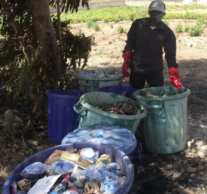
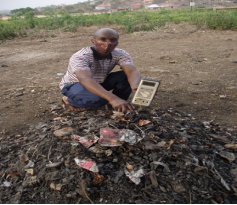
The experimental study focuses on a quantity of 100 kg of concentrated sewage sludge and a sample of 168 kg of household waste, which were collected from different neighbourhoods of the urban commune of Mamou (Figures 1 and 2). Windrow composting was used, divided into two main stages: the collection of substrates to be composted (sewage sludge, household waste, and their mixtures) and the monitoring of composting parameters: pH, temperature, and moisture. In this experimental setup, three piles were formed: a pile of sewage sludge for mono-composting, a pile of household waste for mono-composting, and a pile combining sewage sludge and household waste
[13]
Elewa, Mahmoud M. (2024). Emerging and Conventional Water Desalination Technologies Powered by Renewable Energy and Energy Storage Systems toward Zero Liquid Discharge. Separations, 11(10), 291.
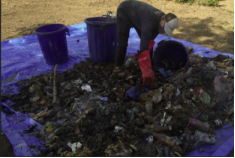
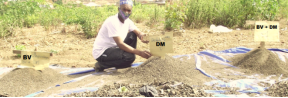
The substrates shown in Figure 3 were watered regularly every two days to maintain optimal moisture. Periodic watering helped to: maintain sustained microbial activity, especially thermophilic bacteria and fungi, stabilize the internal temperature, and accelerate the transformation of organic matter into mature and valuable compost
[14]
AMCOW. 2021. “African Sanitation Policy Guidelines.” Abuja, Nigeria: African Ministers’ Council on Water.
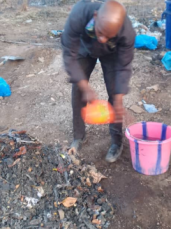
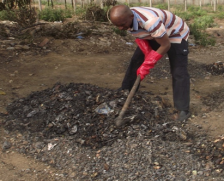
. The substrates were manually turned over every 10 days, over a total period of 40 days (Figure 4)
[15]
Fei‑Baffoe, B., Osei, K., Agyapong, E. A., Nyankson, E. A. Co‑composting of organic solid waste and sewage sludge – a waste management option for University Campus. International Journal of Environment, (date).
[15]
. The digital probe thermometer was used to regularly measure the internal and external temperatures of the piles during the composting period (Figure 5)
[16]
African. Development Bank, United Nations Environment Programme, and GRID-Arendal. 2020. “Sanitation and Wastewater Atlas of Africa.” Abidjan, Nairobi and Arendal: AfDB; UNEP; GRID. Arendal.
. The thermal changes observed over the 40 days of composting, illustrated in Figure 6, allowed the identification of the different phases: temperature rise, thermophilic plateau, sufficient cooling (≥ 55°C), and maturation in order to validate the biological stability of the resulting product
[17]
Villas-Boas, R. L., & Esposito, E. (2022). Composting agroindustrial residues: process parameters and compost quality. Waste and Biomass Valorization, 13, 1087–1098.
[17]
.
A compost drying and sorting operation was carried out from day 43 to day 47. The windrows were spread out in the open air to accelerate the final drying, and daily turning each morning promoted the evaporation of residual moisture and helped to even out the drying of the materials. On day 48, a sieving operation allowed for the separation of coarse rejects (undecomposed elements) from the final compost. Each obtained fraction was weighed individually, enabling an assessment of the final yield of the process and the proportion of recoverable material. The different stages of the composting process are illustrated in Figures 1, 2, 3, 4, 5, and 6.
The results of this study concern the composting of sludge from emptying tanks both alone and in co-composting with household waste, as well as the evolution of temperature in the composting process (Table 1).
The results in Table 1 show that, during the 40 days of the composting process of the substrates (sewage sludge and household waste) in both mono- and co-composting, significant different quantities and qualities were obtained. The initial sampling quantities for the experimental composting study involved 34 kg of each type of substrate (concentrated sewage sludge, household waste, and the mixture of the two). It emerges from the experiment that these different substrates produced respectively 23.3 kg of compost from concentrated sludge, which is 68.52%, with 10.7 kg of reject, or 31.47%. Household waste substrates produced 22.65 kg of compost, or 66.62%, with a reject quantity of 11.35 kg, or 33.38%. Co-composting (sludge with household waste) produced 28.69 kg of compost, or 84.38%, for a reject quantity of 5.31 kg, or 15.61%. The results obtained are generally very satisfactory in terms of quantity and quality and are relatively close to those reported by other authors
[18]
Manea, E. E., & Bumbac, C. (2024). Sludge Composting — Is This a Viable Solution for Wastewater Sludge Management? Water, 16(16), 2241.
[19]
Degefe, G., Ayele, C., & Shimekit, F. (2025). Windrow composting: a viable option for the management and conversion of various agro-industrial organic wastes in Ethiopia. Journal of Applied and Natural Science, 17(2), 6310.
. The processes of organic matter degradation in the different types of substrates.
Table 2. Process of organic matter decomposition in substrates.Process of organic matter decomposition in substrates.Process of organic matter decomposition in substrates.
Criterion
Sludge from Drainage (SD)
Household Waste (HW)
Co-internship (SD + HW)
Maximum temperature
45°C
55°C
60°C
Growth rate
Slow
Fast
Very fast
Thermophilic phase duration
Short
Medium
Long
Thermal stability
Low
Medium
High
Treatment potential
Limited
Good
Excellent
Microbial activity
Moderate
High
Very high
Over all interpretation
Poor substrate, not very effective on its own
Good substrate, but needs improvement on its own
Optimal substrate, accelerated and efficient composting
The results in Table 2 confirm that co-composting is the most suitable substrate for valorizing septage sludge in the context of sustainable organic waste management in Mamou
[21]
Kumar, A., Singh, R., & Gupta, P. (2023). Effect of turning frequency on the quality and stability of windrow composting of organic wastes. Environmental Technology & Innovation, 30,
. This technique not only combines the biological benefits of household waste with the moisture and nutrients of sewage sludge, but it also promotes a temperature increase followed by optimal stabilization (rapid activation, prolonged thermophilic phase, high stabilization) and ensures better sanitation, effective maturation, and an enriched, efficient, and stabilized compost
[22]
Elena Elisabeta Manea and Costel Bumba. Sludge Composting - Is This a Viable Solution for Wastewater Sludge Management? Water, MDPI, 2024, 16, 2241.
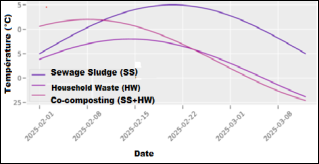
Figure 7 shows the variation in external and internal composting temperatures of desludged sludge, household waste, and the mixture of the two substrates.
Figure 7. Variation in composting temperature.Variation in composting temperature.
The curves in Figure 7 show that the variation in composting temperatures of the three types of substrates (BV, DM, and BV+DM) each follows three phases (initial, short thermophilic, and stabilization)
[23]
Yangqing Hu & Ce Shen, Thermophilic-mesophilic temperature phase anaerobic co-digestion compared with single phase co-igestion of sewage sludge and food waste. Scientific Reports, 2024, 14: 11967.
In the sludge composting process, the three phases are as follows: the initial phase shows a stable and low temperature, starting at 25°C at the beginning of production and reaching a maximum of 45°C around the 15th day; the short thermophilic phase, with a temperature that remains in the thermophilic range above 40°C for a short period, indicating that the degradation of organic matter is limited; the stabilization phase is characterized by a rapid temperature drop from 21°C to 18°C and becomes stable from the 33rd to the 40th day, indicating the depletion of biodegradable organic matter. This demonstrates a low carbon content and moderate microbial activity. Using only concentrated sludge limits thermal reactivity, thus compromising the effectiveness of composting.
3.2.2. Household Waste (HW)
In the case of composting household waste, the initial phase shows a rapid temperature rise, reaching 27°C on the first day; the thermophilic phase is marked by a temperature increase starting from the 13th day, reaching 55°C on the 14th day, which is favorable for pathogen degradation. During the gradual decline phase, the temperature drop is slower than that of sewage sludge, indicating that household waste has better thermal retention because it is rich in easily degradable organic matter. This waste generates effective fermentation, but composting it alone leads to a lack of moisture or regulation. The stabilization phase is characterized by a temperature drop from 27°C to 18°C and becomes less stable from the 33rd to the 40th day.
3.2.3. Co-composting of Sludge and Household Waste (SS + HW)
In the case of Co-composting (BV + DM), the initial phase begins with a rapid, progressive increase in temperature, reaching 26°C on the first day; the prolonged thermophilic phase occurs during this period, with the temperature remaining high for longer than with the other two substrates, from the 8th to the 20th day, reaching 60°C. This is favourable for the complete degradation of organic matter. The gradual cooling phase shows a decrease in temperature from 22°C to 19°C from the 4th to the 8th day, which indicates good process stability. The stabilization phase is characterized by a drop in temperature from 22°C to 19°C and remains stable from the 4th to the 12th day.
4. Conclusion
This study made it possible to experiment with the effectiveness of composting and co-composting as techniques for recovering sludge and household waste collected in the urban commune of Mamou, Republic of Guinea. In a context of poorly structured sanitation sub-sector, predominance of uncovered traditional latrines, and unregulated emptying services, the management of liquid and solid waste constitutes a major environmental, health, and socio-economic challenge. The results obtained from these three substrates are as follows: Sludge at 45°C and household waste at 55°C produced 23.3 kg and 22.65 kg of compost, respectively. Co-composting showed superior performance with a yield of 28.69 kg, a prolonged thermophilic phase reaching 60°C, and rapid stabilization of the substrate. These characteristics reflect better treatment, complete degradation of organic matter, and maturation of the compost accelerated. The mixture of concentrated sludge and household waste helped to compensate for the individual limitations of the substrates in terms of physic-chemical properties: the water deficit of household waste and the low thermal reactivity of the sludge. Fermentation was homogeneous thanks to the complementarity of the substrates, the regulation of optimal moisture, and sustained microbial activity, essential conditions for producing a nutrient-rich, stable compost suitable for soil amendment.
The experimental study based on windrow composting with thermal monitoring and regular turning confirmed the concrete possibility of locally valorizing organic waste. It offers pragmatic solutions to improve urban living conditions, promote profitable peri-urban agriculture, and reduce environmental nuisances.
The co-composting of septic sludge and household waste is an innovative strategy to strengthen the stability and performance of sanitation systems in the Guinean context. Its integration into local waste management programs, accompanied by technical and institutional support, could contribute to the transition toward sustainable, inclusive, and valorizing sanitation, encouraging its expansion to other urban areas of the country.
Abbreviations
DS
Sludge from Drainage SD
HW
Household Waste
Qi_S
Initial Substrate Quantity
C
Compost
TC
Compost Rate
TR
Rebuttal Rate
Conflicts of Interest
The authors declare no conflicts of interest.
References
[1]
Emerging and Conventional Water Desalination Technologies Powered by Renewable Energy and Energy Storage Systems toward Zero Liquid Discharge. Separations, 11(10), 291.
Vollset, Stein E., Goren, Eran, Cao, Jing, et al. (2020). Fertility, mortality, migration, and population scenarios for 195 countries and territories from 2017 to 2100: a forecasting analysis for the Global Burden of Disease Study. The Lancet, 396(10258), 1285–1306.
Soumah D, Magassouba D, Keita M, Sakouvogui A. Evaluation of bacteriological and parasitological quality raw domestic waste water from the city of Conakry (Republic of Guinea). Int J Biotechnol Microbiol. 2022; 4(1): 54–61. Available from:
Manga, Musa; Evans, Barbara E.; Ngasala, Tula M.; Camargo-Valero, Miller A. (2022). Recycling of Faecal Sludge: Nitrogen, Carbon and Organic Matter Transformation during Co-Composting of Faecal Sludge with Different Bulking Agents. International Journal of Environmental Research and Public Health, 19(17), 10592.
Bernal, M. P., Alburquerque, J. A., & Moral, R. (2009). Composting of animal manures and chemical criteria for compost maturity assessment: A review. Bioresource Technology, 100(22), 5444–5453.
Manga, Musa; Evans, Barbara E.; Camargo-Valero, Miller A. (2021). Faecal sludge management in low-income countries: A review of practices, challenges and prospects for resource recovery. Science of the Total Environment, 780, 146367.
Grgas D, Stefanac T, Baresic M, Toromanovic M, Ibrahimpasic J, Vukusic Pavicic T, Habuda-Stanic M, Herceg Z, Landeka Dragicevic T. Co-composting of sewage sludge, green waste, and food waste. J Sustain Dev Energy Water Environ Syst. 2023; 11(1): 1100415.
Awasthi MK, Pandey AK, Khan J, Bundela PS, Wong JWC. Co-composting of sewage sludge and organic fraction of municipal solid waste: Nutrient transformation and humification. Waste Manag. 2020; 102: 52–61.
Liu H, Wang J, Zhou Y. Effects of co-composting sewage sludge with food waste on microbial community and compost maturity. Bioresour Technol. 2021; 319: 124–138.
Niyonzima F, Habimana J, Uwizeye A. Co-composting of faecal sludge and organic solid waste: Hygienic quality and agronomic potential. Environ Technol Innov. 2020; 20: 101112.
Mahaman Moussa Hassan M, Abdoulaye I, Adamou S. Co-composting of sewage sludge and municipal waste: Nutrient recovery and pathogen reduction. J Environ Manag. 2024; 345: 118129.
Elewa, Mahmoud M. (2024). Emerging and Conventional Water Desalination Technologies Powered by Renewable Energy and Energy Storage Systems toward Zero Liquid Discharge. Separations, 11(10), 291.
Fei‑Baffoe, B., Osei, K., Agyapong, E. A., Nyankson, E. A. Co‑composting of organic solid waste and sewage sludge – a waste management option for University Campus. International Journal of Environment, (date).
[16]
African. Development Bank, United Nations Environment Programme, and GRID-Arendal. 2020. “Sanitation and Wastewater Atlas of Africa.” Abidjan, Nairobi and Arendal: AfDB; UNEP; GRID. Arendal.
Villas-Boas, R. L., & Esposito, E. (2022). Composting agroindustrial residues: process parameters and compost quality. Waste and Biomass Valorization, 13, 1087–1098.
[18]
Manea, E. E., & Bumbac, C. (2024). Sludge Composting — Is This a Viable Solution for Wastewater Sludge Management? Water, 16(16), 2241.
[19]
Degefe, G., Ayele, C., & Shimekit, F. (2025). Windrow composting: a viable option for the management and conversion of various agro-industrial organic wastes in Ethiopia. Journal of Applied and Natural Science, 17(2), 6310.
Kumar, A., Singh, R., & Gupta, P. (2023). Effect of turning frequency on the quality and stability of windrow composting of organic wastes. Environmental Technology & Innovation, 30,
Yangqing Hu & Ce Shen, Thermophilic-mesophilic temperature phase anaerobic co-digestion compared with single phase co-igestion of sewage sludge and food waste. Scientific Reports, 2024, 14: 11967.
Barry, T. A., Sakouvogui, A., Sackho, A. M., Kante, C. (2026). Value Recovery of Septage Through Compost Production from Septage and Household Waste: Case of the Urban Municipality of Mamou, Guinea. American Journal of Environmental Protection, 15(1), 12-18. https://doi.org/10.11648/j.ajep.20261501.12
Barry, T. A.; Sakouvogui, A.; Sackho, A. M.; Kante, C. Value Recovery of Septage Through Compost Production from Septage and Household Waste: Case of the Urban Municipality of Mamou, Guinea. Am. J. Environ. Prot.2026, 15(1), 12-18. doi: 10.11648/j.ajep.20261501.12
Barry TA, Sakouvogui A, Sackho AM, Kante C. Value Recovery of Septage Through Compost Production from Septage and Household Waste: Case of the Urban Municipality of Mamou, Guinea. Am J Environ Prot. 2026;15(1):12-18. doi: 10.11648/j.ajep.20261501.12
@article{10.11648/j.ajep.20261501.12,
  author = {Thierno Amadou Barry and Ansoumane Sakouvogui and Adama Moussa Sackho and Cellou Kante},
  title = {Value Recovery of Septage Through Compost Production from Septage and Household Waste: Case of the Urban Municipality of Mamou, Guinea},
  journal = {American Journal of Environmental Protection},
  volume = {15},
  number = {1},
  pages = {12-18},
  doi = {10.11648/j.ajep.20261501.12},
  url = {https://doi.org/10.11648/j.ajep.20261501.12},
  eprint = {https://article.sciencepublishinggroup.com/pdf/10.11648.j.ajep.20261501.12},
  abstract = {The management of septic sludge and household waste is a major challenge for cities in Guinea in general, and for the urban commune of Mamou in particular. The sanitation sector is very poorly structured, characterized by the predominance of independent facilities and the absence of regulation for emptying services. This study aims to carry out a trial for the valorization of these types of waste produced in the urban commune of Mamou. The methodology consisted of collecting the substrates (septic sludge and household waste). Then, a sampling of 34 kg of each type of waste was done for co-composting. The substrate composting process lasted 40 days; the quantities of compost produced were evaluated. The different substrates produced respectively 23.3 kg of compost for concentrated septic sludge, or 68.52%, with 10.7 kg of residue, or 31.47%. The household waste substrates produced 22.65 kg of compost, or 66.62%; with a amount of residue of 11.35 kg, or 33.38%. Co-composting (septic sludge with household waste) produced 28.69 kg of compost, or 84.38%, with a residue amount of 5.31 kg, or 15.61%. The curves showing the variation in composting temperature for the three types of substrates (septic sludge, household waste, and septic sludge + household waste) each display three phases (initial, short thermophilic, and stabilization). The results obtained show that co-composting the substrates is the most suitable method for valorizing septic sludge in the context of sustainable organic waste management in Mamou.},
 year = {2026}
}
TY  - JOUR
T1  - Value Recovery of Septage Through Compost Production from Septage and Household Waste: Case of the Urban Municipality of Mamou, Guinea
AU  - Thierno Amadou Barry
AU  - Ansoumane Sakouvogui
AU  - Adama Moussa Sackho
AU  - Cellou Kante
Y1  - 2026/01/20
PY  - 2026
N1  - https://doi.org/10.11648/j.ajep.20261501.12
DO  - 10.11648/j.ajep.20261501.12
T2  - American Journal of Environmental Protection
JF  - American Journal of Environmental Protection
JO  - American Journal of Environmental Protection
SP  - 12
EP  - 18
PB  - Science Publishing Group
SN  - 2328-5699
UR  - https://doi.org/10.11648/j.ajep.20261501.12
AB  - The management of septic sludge and household waste is a major challenge for cities in Guinea in general, and for the urban commune of Mamou in particular. The sanitation sector is very poorly structured, characterized by the predominance of independent facilities and the absence of regulation for emptying services. This study aims to carry out a trial for the valorization of these types of waste produced in the urban commune of Mamou. The methodology consisted of collecting the substrates (septic sludge and household waste). Then, a sampling of 34 kg of each type of waste was done for co-composting. The substrate composting process lasted 40 days; the quantities of compost produced were evaluated. The different substrates produced respectively 23.3 kg of compost for concentrated septic sludge, or 68.52%, with 10.7 kg of residue, or 31.47%. The household waste substrates produced 22.65 kg of compost, or 66.62%; with a amount of residue of 11.35 kg, or 33.38%. Co-composting (septic sludge with household waste) produced 28.69 kg of compost, or 84.38%, with a residue amount of 5.31 kg, or 15.61%. The curves showing the variation in composting temperature for the three types of substrates (septic sludge, household waste, and septic sludge + household waste) each display three phases (initial, short thermophilic, and stabilization). The results obtained show that co-composting the substrates is the most suitable method for valorizing septic sludge in the context of sustainable organic waste management in Mamou.
VL  - 15
IS  - 1
ER  -
Barry, T. A., Sakouvogui, A., Sackho, A. M., Kante, C. (2026). Value Recovery of Septage Through Compost Production from Septage and Household Waste: Case of the Urban Municipality of Mamou, Guinea. American Journal of Environmental Protection, 15(1), 12-18. https://doi.org/10.11648/j.ajep.20261501.12
Barry, T. A.; Sakouvogui, A.; Sackho, A. M.; Kante, C. Value Recovery of Septage Through Compost Production from Septage and Household Waste: Case of the Urban Municipality of Mamou, Guinea. Am. J. Environ. Prot.2026, 15(1), 12-18. doi: 10.11648/j.ajep.20261501.12
Barry TA, Sakouvogui A, Sackho AM, Kante C. Value Recovery of Septage Through Compost Production from Septage and Household Waste: Case of the Urban Municipality of Mamou, Guinea. Am J Environ Prot. 2026;15(1):12-18. doi: 10.11648/j.ajep.20261501.12
@article{10.11648/j.ajep.20261501.12,
  author = {Thierno Amadou Barry and Ansoumane Sakouvogui and Adama Moussa Sackho and Cellou Kante},
  title = {Value Recovery of Septage Through Compost Production from Septage and Household Waste: Case of the Urban Municipality of Mamou, Guinea},
  journal = {American Journal of Environmental Protection},
  volume = {15},
  number = {1},
  pages = {12-18},
  doi = {10.11648/j.ajep.20261501.12},
  url = {https://doi.org/10.11648/j.ajep.20261501.12},
  eprint = {https://article.sciencepublishinggroup.com/pdf/10.11648.j.ajep.20261501.12},
  abstract = {The management of septic sludge and household waste is a major challenge for cities in Guinea in general, and for the urban commune of Mamou in particular. The sanitation sector is very poorly structured, characterized by the predominance of independent facilities and the absence of regulation for emptying services. This study aims to carry out a trial for the valorization of these types of waste produced in the urban commune of Mamou. The methodology consisted of collecting the substrates (septic sludge and household waste). Then, a sampling of 34 kg of each type of waste was done for co-composting. The substrate composting process lasted 40 days; the quantities of compost produced were evaluated. The different substrates produced respectively 23.3 kg of compost for concentrated septic sludge, or 68.52%, with 10.7 kg of residue, or 31.47%. The household waste substrates produced 22.65 kg of compost, or 66.62%; with a amount of residue of 11.35 kg, or 33.38%. Co-composting (septic sludge with household waste) produced 28.69 kg of compost, or 84.38%, with a residue amount of 5.31 kg, or 15.61%. The curves showing the variation in composting temperature for the three types of substrates (septic sludge, household waste, and septic sludge + household waste) each display three phases (initial, short thermophilic, and stabilization). The results obtained show that co-composting the substrates is the most suitable method for valorizing septic sludge in the context of sustainable organic waste management in Mamou.},
 year = {2026}
}
TY  - JOUR
T1  - Value Recovery of Septage Through Compost Production from Septage and Household Waste: Case of the Urban Municipality of Mamou, Guinea
AU  - Thierno Amadou Barry
AU  - Ansoumane Sakouvogui
AU  - Adama Moussa Sackho
AU  - Cellou Kante
Y1  - 2026/01/20
PY  - 2026
N1  - https://doi.org/10.11648/j.ajep.20261501.12
DO  - 10.11648/j.ajep.20261501.12
T2  - American Journal of Environmental Protection
JF  - American Journal of Environmental Protection
JO  - American Journal of Environmental Protection
SP  - 12
EP  - 18
PB  - Science Publishing Group
SN  - 2328-5699
UR  - https://doi.org/10.11648/j.ajep.20261501.12
AB  - The management of septic sludge and household waste is a major challenge for cities in Guinea in general, and for the urban commune of Mamou in particular. The sanitation sector is very poorly structured, characterized by the predominance of independent facilities and the absence of regulation for emptying services. This study aims to carry out a trial for the valorization of these types of waste produced in the urban commune of Mamou. The methodology consisted of collecting the substrates (septic sludge and household waste). Then, a sampling of 34 kg of each type of waste was done for co-composting. The substrate composting process lasted 40 days; the quantities of compost produced were evaluated. The different substrates produced respectively 23.3 kg of compost for concentrated septic sludge, or 68.52%, with 10.7 kg of residue, or 31.47%. The household waste substrates produced 22.65 kg of compost, or 66.62%; with a amount of residue of 11.35 kg, or 33.38%. Co-composting (septic sludge with household waste) produced 28.69 kg of compost, or 84.38%, with a residue amount of 5.31 kg, or 15.61%. The curves showing the variation in composting temperature for the three types of substrates (septic sludge, household waste, and septic sludge + household waste) each display three phases (initial, short thermophilic, and stabilization). The results obtained show that co-composting the substrates is the most suitable method for valorizing septic sludge in the context of sustainable organic waste management in Mamou.
VL  - 15
IS  - 1
ER  -





 Share This Article
 Twitter
 Linked In
 Facebook
 Copy
Copy Download